
Overview
Snoozing a test temporarily pauses it from running. This page explains what happens to your runs when a test is snoozed. For how to snooze or unsnooze a test, see Snooze Tests.What Happens to Scheduled Runs
When a test is snoozed, it is automatically skipped across all automated run contexts for the duration of the snooze period:- Scheduled test plans — the snoozed test is excluded from every scheduled execution
- CI/CD pipeline runs — the test is skipped when your pipeline triggers a test plan
- Suite runs — the test does not execute when the full suite is run
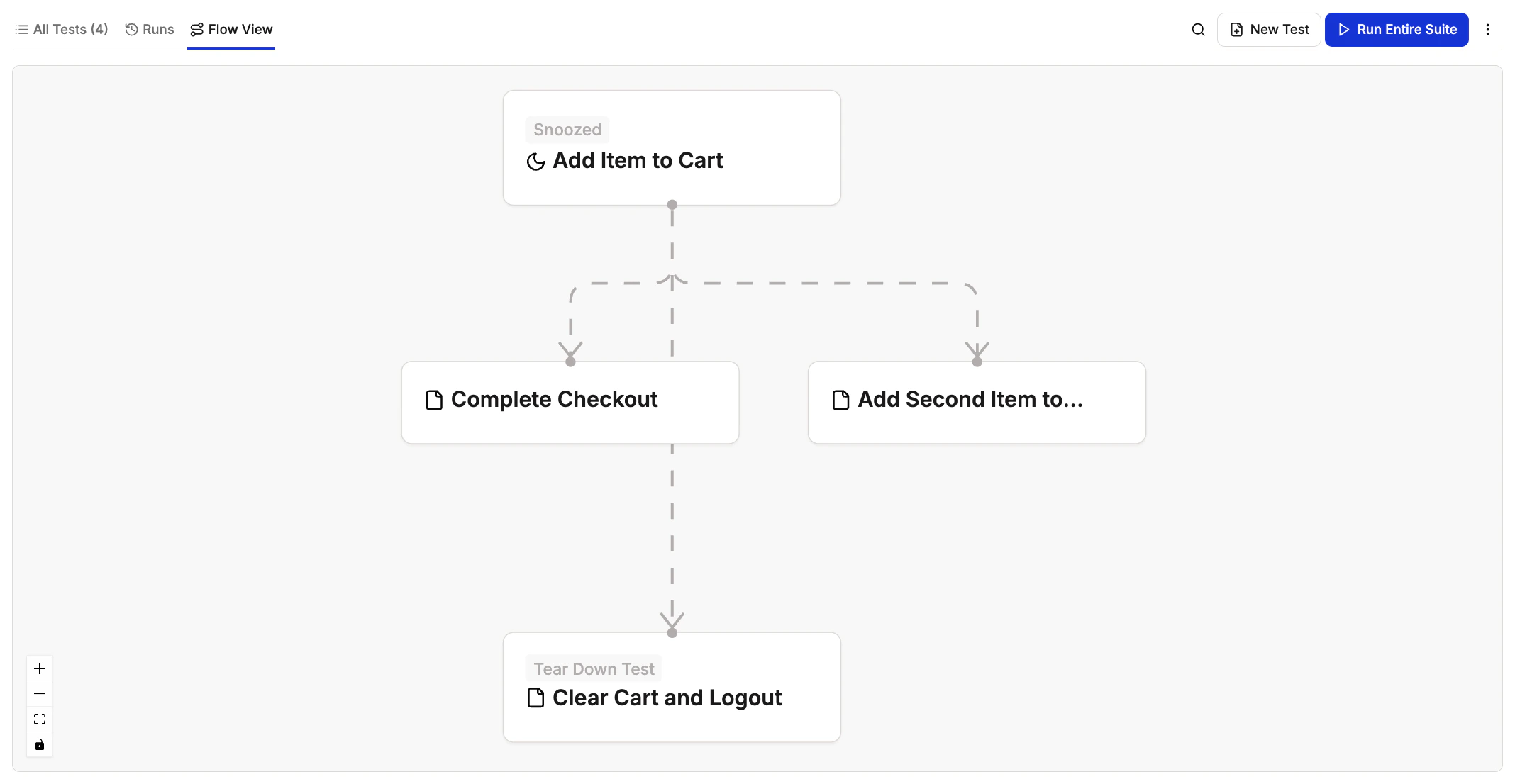
Flow view showing a snoozed test and its paused dependent tests
What Happens in Manual Runs
Snoozing behaves differently depending on how you trigger the run:
If you need to run a snoozed test to debug or verify a fix, trigger it directly from the test rather than from the suite or test plan.