Using scenario properties in a test step

Once you’ve connected a Scenario Table to a test, you can use its properties directly in your test steps to create dynamic, data-driven tests.

Property insertion with [

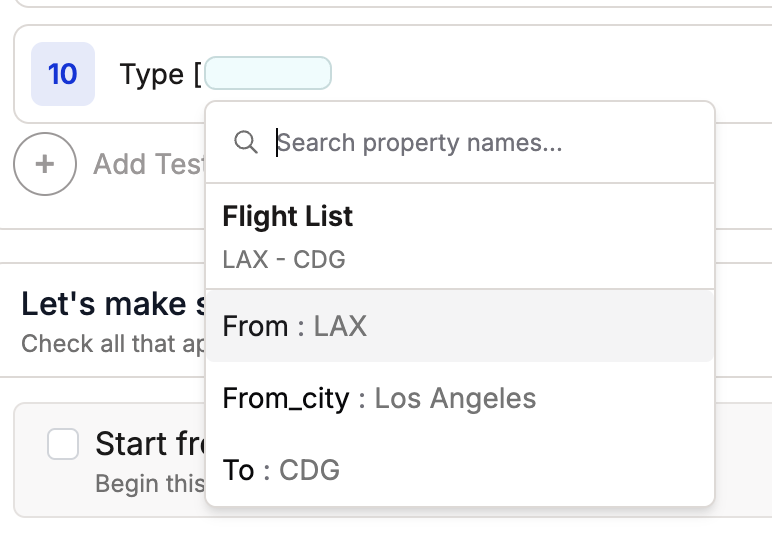
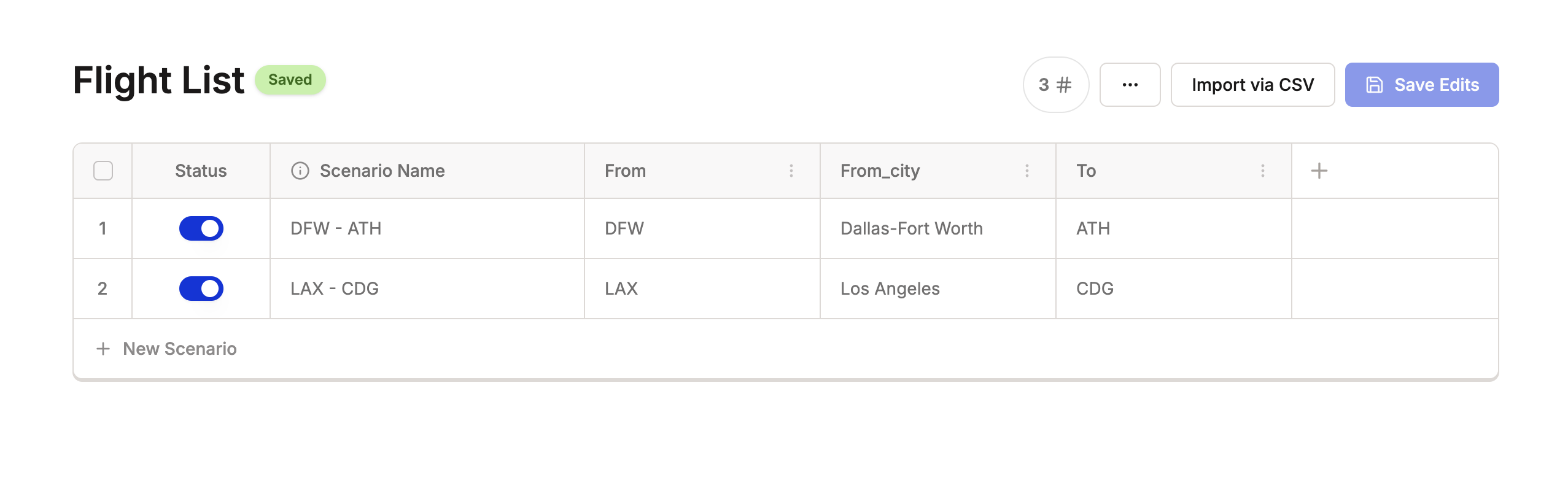
In the test step editor, type the [ key to trigger the Scenario Property Menu. This menu will show all available properties from the Scenario Table you’ve linked to this test. For example, if your table contains: Screenshot 2025-04-28 at 5.11.43 PM.png Typing [ will let you choose between:
  • From
  • From_city
  • To
Screenshot 2025-04-28 at 5.13.04 PM.png Once selected, the property will appear in your test step like this: Image When the test runs, Spur will replace [From_city] with the actual value from each scenario row—for example:
  • In Scenario 1 DFW - ATH: Type Dallas-Fort Worth
  • In Scenario 2 LAX - CDG: Type Los Angeles
This allows a single test to dynamically adapt to multiple data inputs.

Mid-step insertion with /

You can also insert scenario properties and other variables in the middle of existing step text by typing / at any cursor position. This opens the Shortcuts Menu, which in mid-step mode includes:
  • Scenario — Insert a scenario table property at the current cursor position
  • Insert Variable — Insert an environment variable at the current cursor position
  • Email — Insert an email inbox reference at the current cursor position
Select Scenario from the menu to open the Scenario Property Menu and choose a property to insert at the cursor—without rewriting the step from scratch.
Use [ when you want to insert a scenario property at the start of a step or on its own. Use / when you need to embed a variable or scenario reference in the middle of existing step text.

Preview and validation

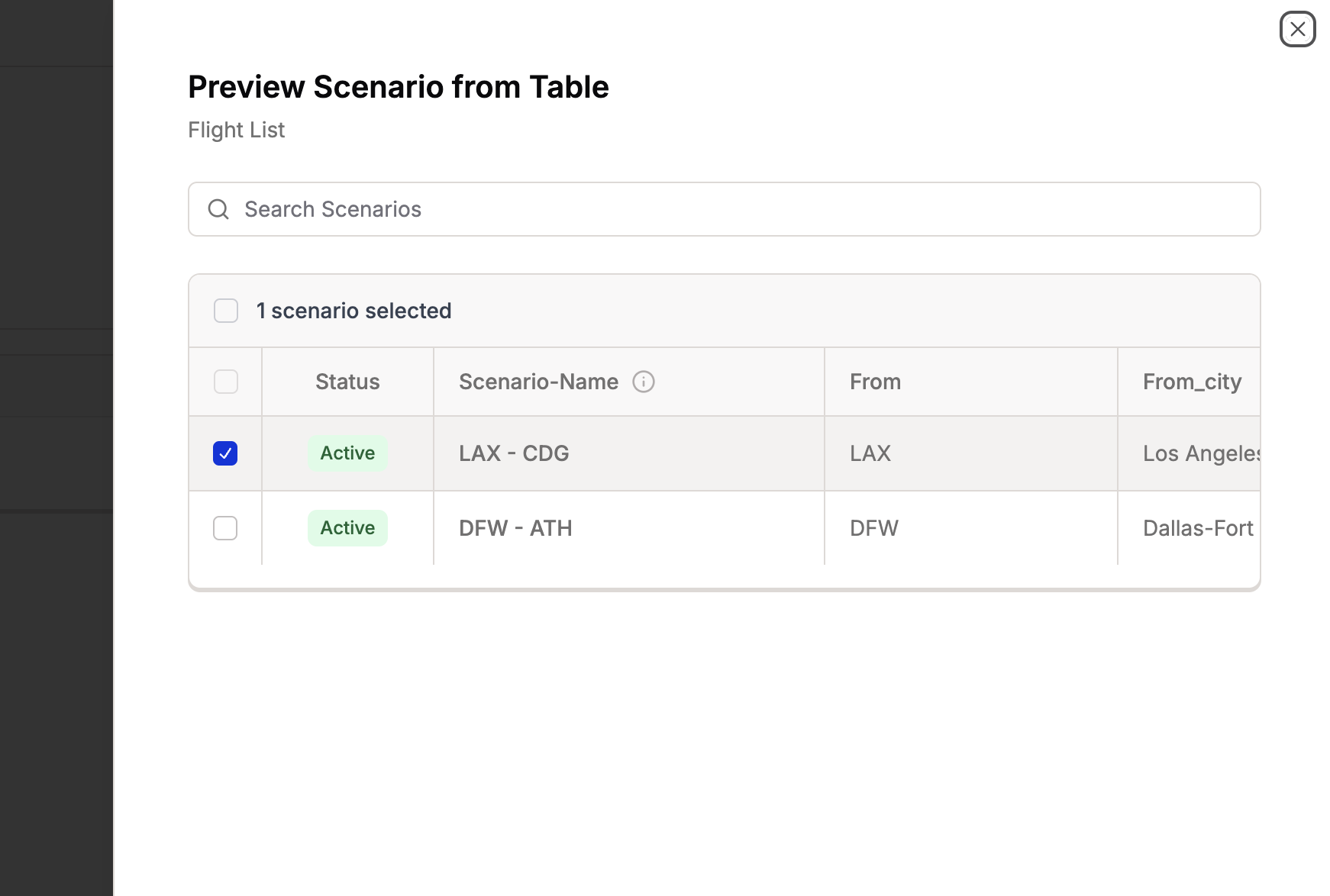
  • You can preview a set of property values for a specific scenario by clicking the scenario preview icon ([ ]) in the test editor.
  • Before running the test, you can preview with different scenarios to ensure that the values are represented correctly.
Screenshot 2025-04-28 at 5.17.16 PM.png

Scenario-activated test icon indication

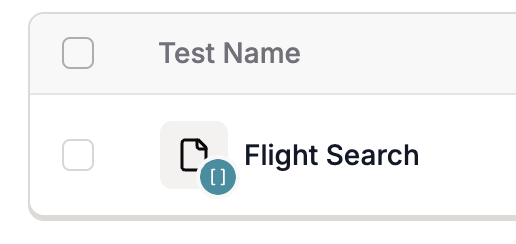
Screenshot 2025-04-28 at 5.19.45 PM.png Once you add a scenario step to the test, you can confirm that the test is a scenario test by verifying the icon for the test changes to the one in the image.

Tips

  • Use clear column headers in your CSV—they become your property names.
  • Make sure each property is referenced with square brackets (e.g. [From_city]), or it won’t be substituted at runtime.
  • You can mix static and dynamic values in a step:
    Verify this text "Searching flights" exists next to [From_city] and [To]